This post contains affiliate links. If you buy through them, we may earn a commission at no extra cost to you. Learn more.
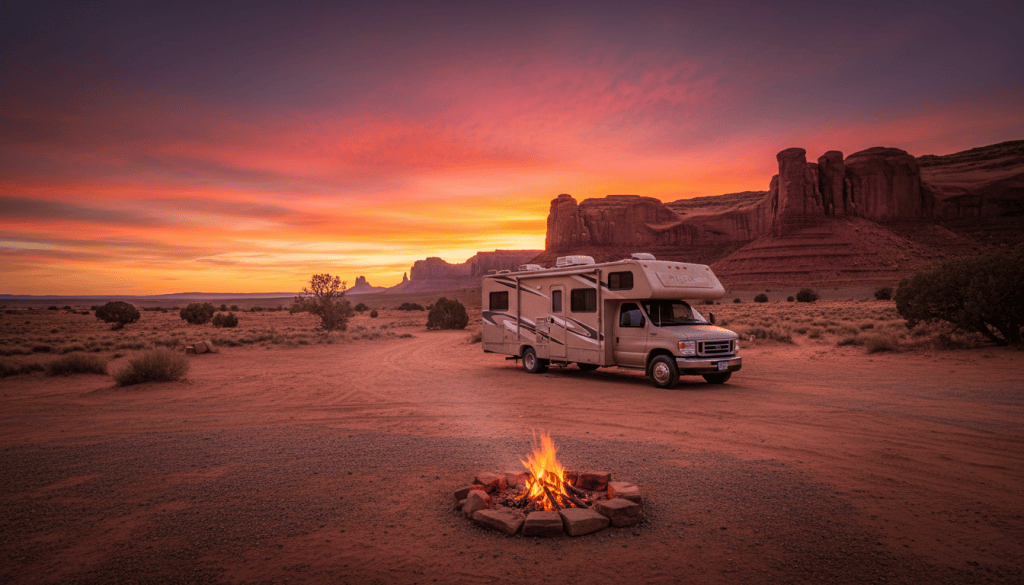
Boondocking, also called dry camping or dispersed camping, means camping without hookups: no water, electric, or sewer connections. It’s often free, usually quieter, and it can put you in some of the most stunning spots in the country. Here’s how to get started.
Where to boondock
- BLM land: Bureau of Land Management land, especially in the West, often allows dispersed camping, typically up to 14 days in one spot.
- National forests: many allow dispersed camping along forest roads. Check the local ranger district for rules.
- Overnight parking: some retailers, truck stops, casinos, and rest areas allow one-night stays. Always ask or check posted signs.
- Host programs: membership programs connect RVers with wineries, farms, and private hosts who offer free overnight stays.
Camping apps and crowd-sourced maps are the easiest way to find spots, read recent reviews, and check road conditions and cell signal.
Managing your resources
Water
Fresh water usually runs out first. Take quick “navy showers,” use a spray bottle for dishes, and carry extra water jugs. Know your tank sizes before you go.
Power
Without hookups, you’ll rely on your house batteries. A portable power station or solar setup makes boondocking far more comfortable, and LED lights and 12V fans stretch your power further.
Waste
Your gray and black tanks set your limit. Conserve water to slow how fast they fill, and know where the nearest dump station is before you arrive.
Boondocking essentials
- Portable power station and/or solar panels
- Extra water containers and a water filter
- Leveling blocks
- A cell signal booster or backup internet
- A portable waste tank (“blue boy”) for extended stays
- A fire extinguisher and a first aid kit
Shop the essentials
- Power: our favorite is the Anker SOLIX C1000 Gen 2. See all picks in our power station guide.
- Solar: the Renogy 200W foldable panel sets up in a minute and lets you park in the shade.
- Water: collapsible water containers and an RV inline water filter.
- Leveling: RV leveling blocks for uneven dispersed sites.
- Signal: the weBoost Drive Reach RV booster helps in fringe-coverage areas.
- Waste: a portable waste tote tank lets you stay longer between dump runs.
- Safety: an RV fire extinguisher and a first aid kit.
Boondocking etiquette
- Leave no trace. Pack out all trash, and never dump tanks on the ground.
- Give space. If you can see someone’s rig, you’re probably too close.
- Respect stay limits and fire restrictions. Check for burn bans before lighting a campfire.
- Keep generators quiet and off during evening hours.
Start small
Try a single night close to services before committing to a week in the backcountry. You’ll quickly learn how long your water, power, and tanks really last. And boondocking is one of the biggest ways to cut your RV living costs.


Leave a Reply